
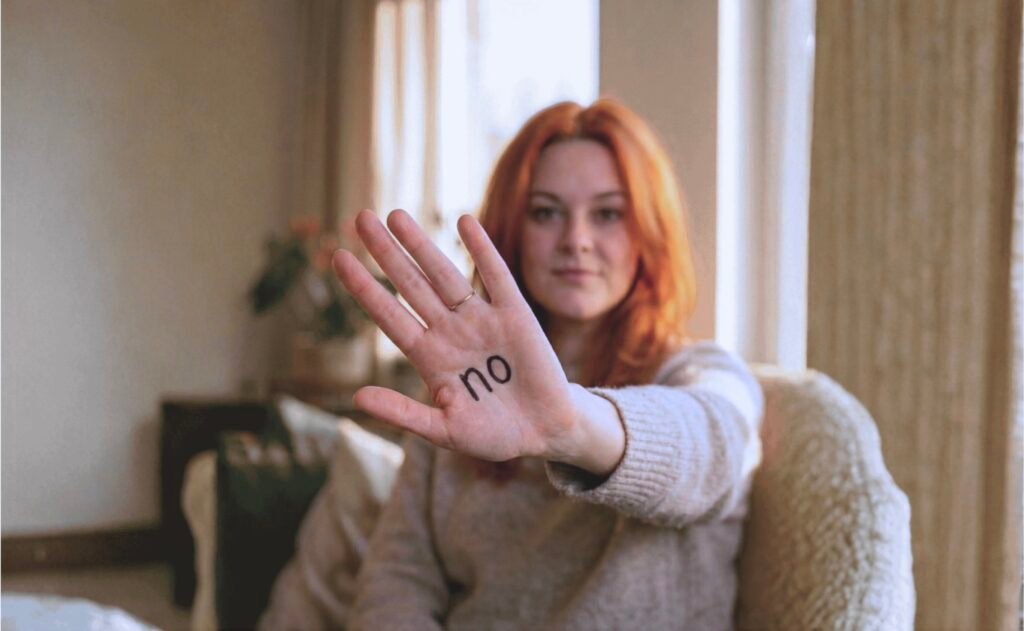
In my old dialect, the word “No” never stood alone. It always arrived with a thousand-word apology attached to it, like a nervous traveler carrying far too much luggage.
I used to feel like I had to justify my boundaries with a mountain of evidence. I believed that my time and energy weren’t actually mine to manage unless I could prove—beyond a reasonable doubt—that I was sufficiently exhausted first. I felt I had to “earn” my right to decline by showing the world my checked off to-do lists.
But as I’m learning through this season, a ceasefire requires respected borders. You cannot have peace if the territory is constantly being invaded—even if the invaders come bearing “good” opportunities, “kind” requests, or “worthwhile” causes.
When we are over-leveraged in our roles—the reliable friend, the tireless volunteer, the “yes” person—we treat our boundaries like suggestions rather than borders. We allow the needs of others to colonize our quietest hours, leaving us with no room to simply exist.
I am practicing “No” as an art form. I’m learning that “No” doesn’t have to be an aggressive act; it can be a quiet, firm act of preservation.
When I say “no” to a project that would tip me from a manageable rhythm into a “Bust” cycle, or “no” to a social outing because my current version needs silence more than it needs small talk, I am not being “difficult.” I am being an advocate.
I am protecting the version of me that is currently rebuilding. If I don’t guard the perimeter of my peace, I won’t have anything left to give when the “Yes” truly matters.
The biggest change hasn’t just been the decision to say no, but the way I say it. I am learning to stop the “apology spiral.”
• The Old Way: “I am so incredibly sorry, I feel terrible even saying this, but I just have so much on my plate, and my husband has this thing, and I haven’t slept, so I don’t think I can…”
• The New Way: “I can’t commit to that right now, but thank you so much for thinking of me.”
You do not owe anyone a detailed map of your exhaustion just to earn the right to rest. You do not have to be at your “breaking point” for a boundary to be valid. Your “No” is the fence that keeps your “Yes” meaningful. When you say “No” to the things that drain you, you are finally saying “Yes” to the person you are becoming.
What is one thing you need to say “no” to this week to protect your own peace? It might be a standing meeting, a social obligation, or even a self-imposed “rule” that is wearing you thin.
How would it feel to say it without the apology? To let the “No” be a complete sentence?
Share your “No” in the comments below. Let’s practice protecting our borders together.
